TL;DR
- An E36 sunroof isn’t watertight on its own. Water that gets past the seal lands in the water channel of the sunroof frame and leaves through drain hoses.
- BMW’s parts catalogue lists four outlet hoses (two items, quantity 2 each, each about 1.76 m long) for the E36 sedan’s sliding/lifting roof.
- When a drain blocks or a hose comes off, the channel overflows and water runs inside the car: wet headlining, pillars, carpets, and eventually rust and electrical faults.
- Test with a little water, clear gently, never with compressed air at high pressure.
How the drainage works
The sunroof frame has a channel around the opening. Drain outlets at its corners connect to hoses that run down inside the body pillars and let the water out under the car. The hoses are fixed with clamps at the frame.
The exact routing and exit points depend on the body style. Follow the hose from the frame corner, or check the RealOEM diagram for your car (Sliding roof / folding top → Sliding lifting roof drive).
Symptoms of a blocked or disconnected drain
- Wet headlining near a corner of the sunroof
- Water stains or dampness on the A- or C-pillar trim
- Wet carpet in the front or rear footwells, sometimes only after heavy rain or after parking nose-up or nose-down
- A musty smell with no obvious leak
- Rust in the floor or sills that appeared “from inside”
A disconnected hose behind the trim is as common as a blocked one, and needs the trim off to fix.
Testing the drains
- Open the sunroof and clean the channel of leaves and dirt.
- Pour a small amount of water into the channel at one corner.
- It should drain away quickly and come out under the car. Slow draining or nothing coming out means a blockage; water appearing inside the car means a split or disconnected hose.
- Test each corner separately.
Clearing a blocked drain
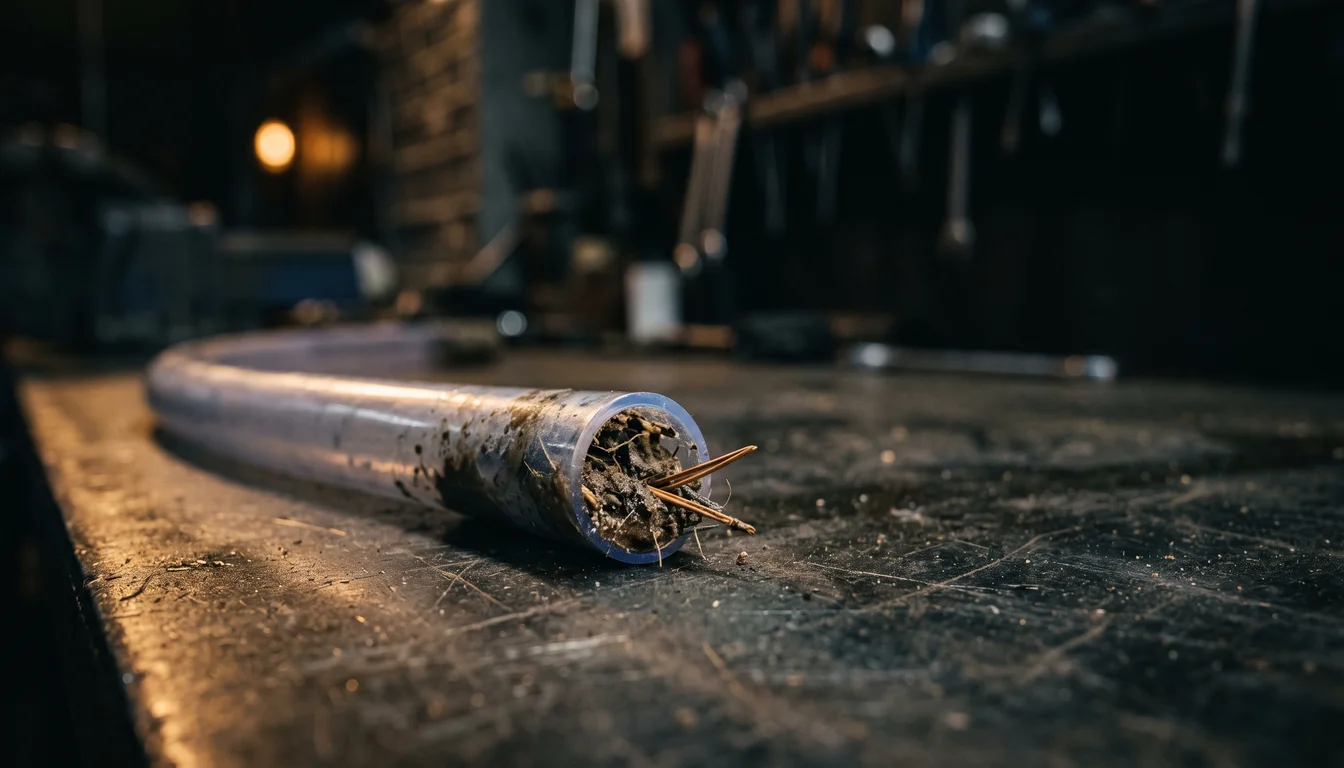
- Trimmer line: a length of strimmer line is stiff enough to push through the hose and flexible enough to follow its bends. Feed it gently from the top, then flush with a little water.
- Don’t use high-pressure compressed air into the drains: it can push the hose off its outlet inside the pillar, turning a blockage into a leak behind the trim.
- Don’t force wire through: it can puncture the hose.
If a hose is cracked or split, replace it. The hoses and clamps are listed on RealOEM for your car. If the water channel itself is damaged, BMW lists a repair kit for it.
What water inside the car can damage
- Floors and sills: wet carpet and insulation hold water against the floor for months. That’s a direct route to rust. See the rust map.
- Electrics: many modules and connectors sit low in the cabin. On the E36 the central body electronics module is behind the glove compartment and other modules below the dash (Bentley). Water at the ground points causes faults that appear unrelated: see the ground distribution guide.
- Airbag system: if water has reached airbag components or connectors, have the system checked properly. Don’t just dry it and hope.
If you find water in the car, lift the carpets and dry everything thoroughly, not just the surface.
The Projekt 36 car has no sunroof. This guide is for E36 owners whose cars do.