TL;DR
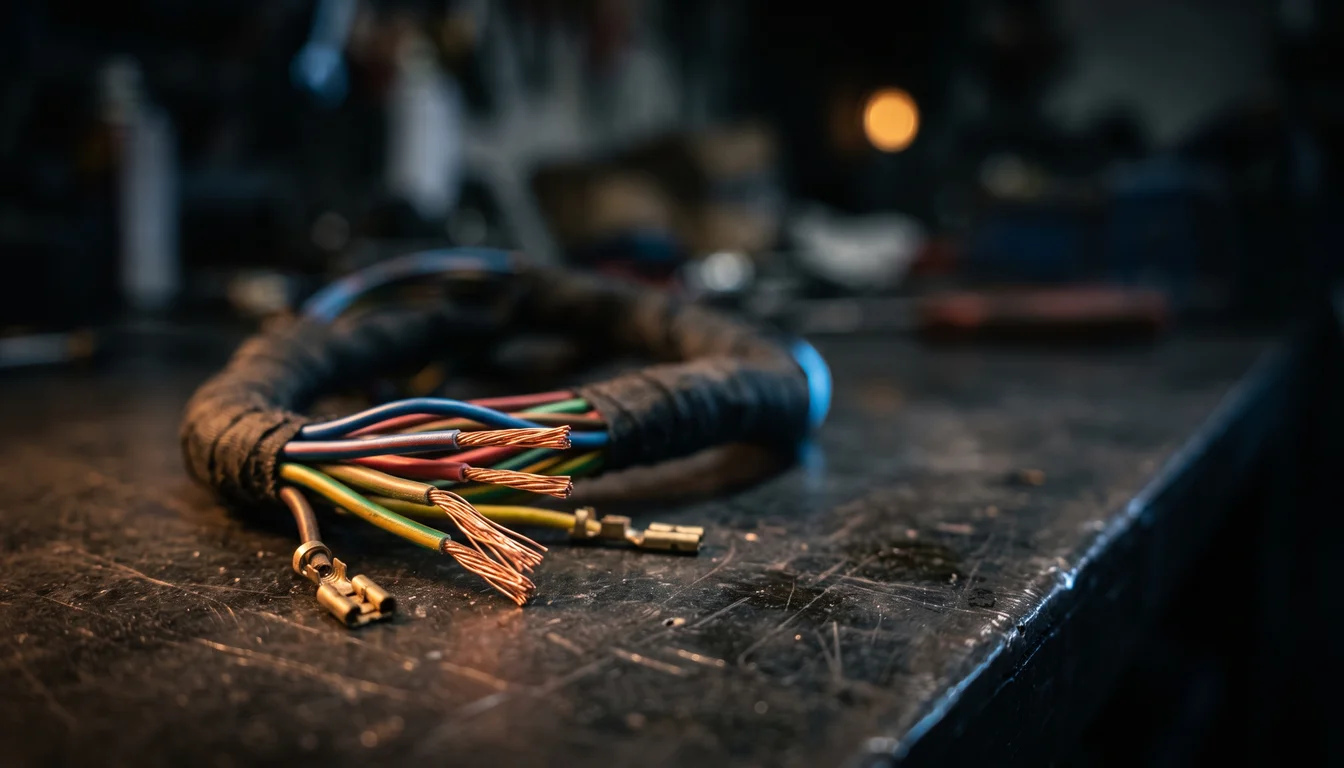
Use the complete M50 engine harness and the DME from the donor engine. Owners who have swapped an M50 into a four-cylinder OBD1 E36 report that the M50 engine harness plugs into the same chassis connector the four-cylinder harness used. The body wiring (lights, locks, instruments) stays. The real electrical work is the immobiliser (EWS), if your car has one, plus a careful check of power, grounds and charging after the swap.
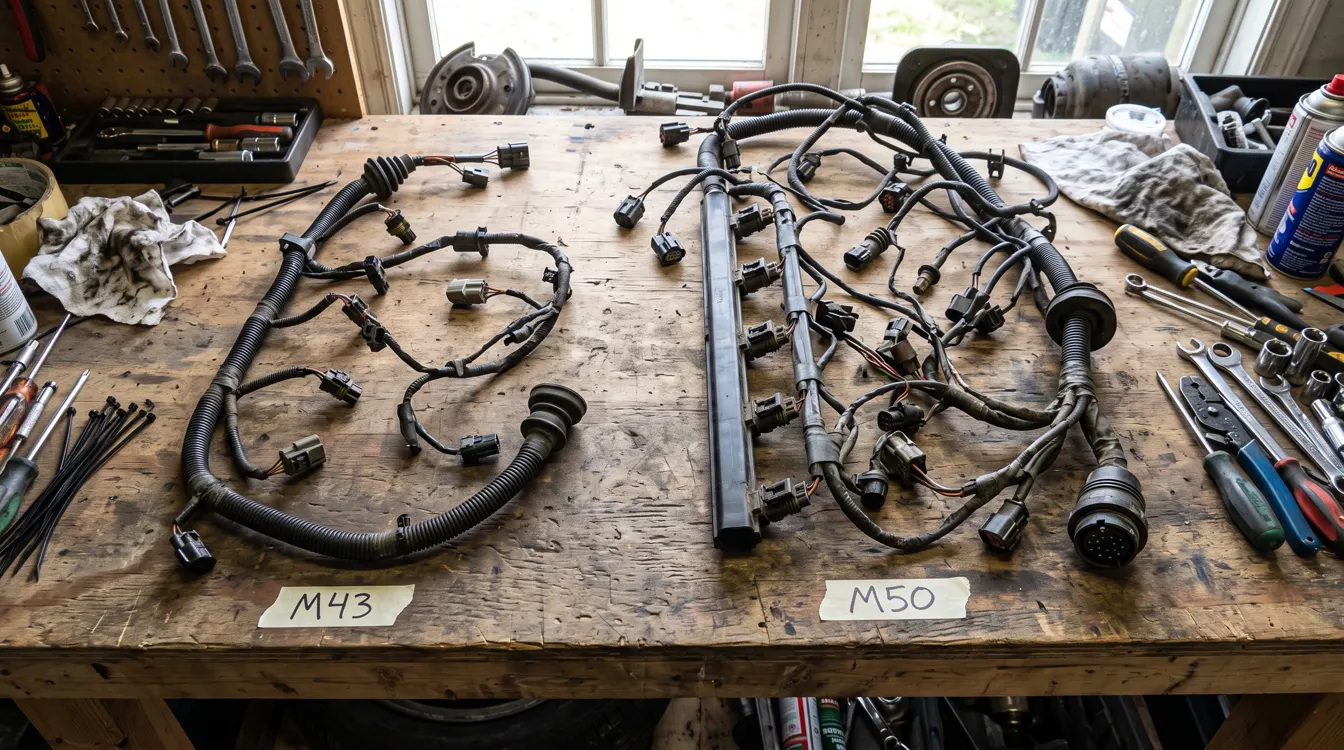
What changes with the engine
| M50 non-VANOS (1992) | M50 VANOS (1993–1995) | |
|---|---|---|
| Engine management (Bentley) | Bosch DME M3.1 | Bosch DME M3.3.1 |
| Air flow meter | Hot-wire | Hot-film |
| Knock sensors | None (no knock inputs on the M3.1) | Two (cylinders 1–3 and 4–6) |
| Camshaft sensor | Cylinder identification sensor | Hall-effect camshaft position sensor |
| VANOS solenoid | — | Yes |
| Ignition | One coil per cylinder | One coil per cylinder |
Whichever you have, the engine sensors, the DME and the harness belong together. Don’t mix M43 parts or wiring into the M50 system. The DME, harness and sensors from the donor engine are a matched set.
Sensor locations worth knowing on the M50:
- Coolant temperature sensor: left side of the cylinder head, under the intake manifold. It’s a dual sensor: one circuit feeds the DME, the other the temperature gauge.
- Intake air temperature sensor: in the intake manifold, behind the throttle position sensor.
Pin assignments for both DMEs are in the DME pinout reference, and sensor test values in the sensor values guide.
EWS: check your car’s build date
Bentley’s timeline:
| Built | System |
|---|---|
| Before January 1994 | No immobiliser |
| From January 1994 | EWS: a starting-inhibition module that interrupts ignition, fuel injection and the starter; armed and disarmed by the central locking; module under the left side of the dashboard |
| From January 1995 | EWS II: coded keys; if the key code doesn’t match, the DME and starter are disabled |
What to do:
- Look for the module under the left side of the dashboard (on EWS II cars, owners report it under the glovebox area). No module means no EWS work: the donor DME and harness go straight in.
- If your car has EWS, plan the solution before buying the DME. In an owner’s write-up of an M50TU going into a 1995 (EWS II) 318is, a “red label” DME ending in 413 was used, and wiring changes at the EWS module were still needed. Details are in the EWS guide.
A swap that is mechanically complete, cranks well and won’t start points at the immobiliser first: check it before chasing sensors.
Cooling fans
The M50 keeps the E36’s fan arrangement:
- Belt-driven fan with a viscous clutch on the water pump: no wiring.
- Two-speed electric auxiliary fan in front of the radiator. Bentley: it serves mainly the A/C, but also switches on when the coolant gets hot, through a dual temperature switch in the radiator: low speed at 91 °C, high speed at 99 °C.
The DME doesn’t switch these. Fit the six-cylinder auxiliary fan and make sure the radiator’s temperature switch is connected.
Post-swap electrical checks
- Grounds: the engine-to-body ground strap, the battery negative cable and the engine ground points. Test with a voltage-drop test under load. See the ground guide.
- DME supplies: battery voltage at all times (terminal 30), with the key on (terminal 15), and from the main relay. Check at the DME connector following Bentley’s safe-testing rules.
- Charging: the alternator’s D+ wire connected; the charge warning light on with the ignition on; 13.5–14.5 V at the battery with the engine running. See the charging guide.
- Fuel pump: the DME switches the fuel pump relay only when it sees the crankshaft signal. No pump while cranking points at the crankshaft sensor or its wiring.
- Fault codes: read them with a diagnostic tool on the 20-pin connector (the accelerator-pedal blink method only works on cars with a Check Engine light). See the OBD1 fault code reference.