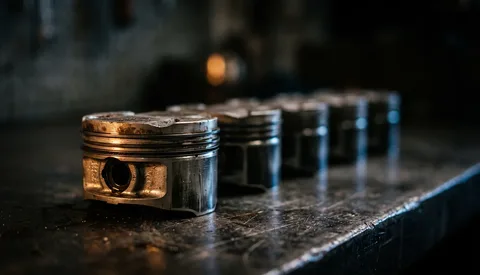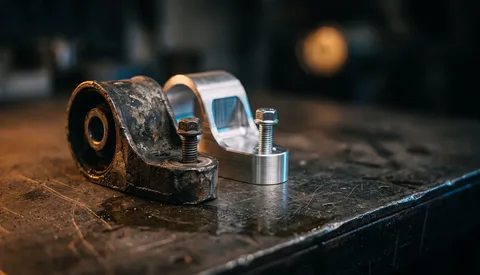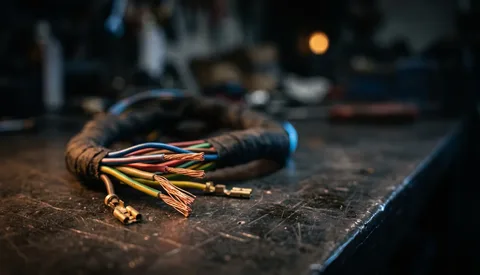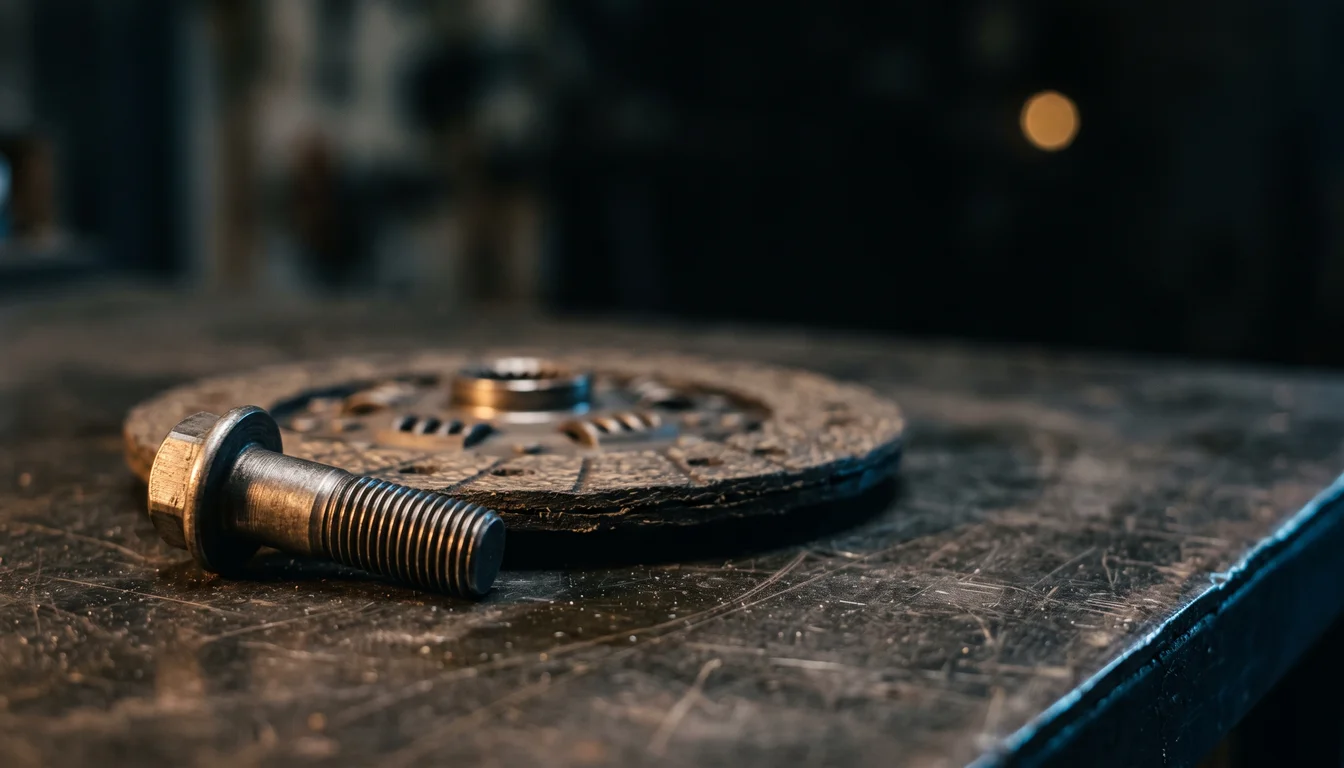
The four-cylinder E36s, the 316i and 318i, are light and plentiful, and an M50 six-cylinder transforms them. Owners who have done it describe the swap as an engine replacement with a few extra steps, provided you collect every part before you start. This guide walks through the order of work. The complete parts list has every part by system.
TL;DR
| What: | Replacing the M43 four-cylinder with an M50 six-cylinder. |
| Why: | From roughly 100 hp to 150 PS (M50B20) or 192 PS (M50B25). |
| Time: | An owner reports about 10 hours to a running engine with all parts at hand; plan more for a careful first swap. |
| Difficulty: | 4/5 |
1. Choose the donor
| Engine | Power | Torque | Built |
|---|---|---|---|
| M50B20 | 150 PS | 190 Nm | Non-VANOS 1990–92; VANOS (TU) 1992–96 |
| M50B25 | 192 PS | 245 Nm (TU: 250 Nm) | Non-VANOS 1990–92; VANOS (TU) 1992–96 |
The B25 is the obvious choice for the effort involved. Then decide between non-VANOS (simpler, rarer, Bosch DME M3.1) and VANOS (better mid-range, common, Bosch DME M3.3.1). See the M50 vs M50TU vs M52 comparison.
Buy it complete: engine with manifolds, alternator, power steering pump, A/C compressor, air flow sensor and intake boot, and above all the uncut engine harness and the DME from the same engine.
2. Solve the immobiliser question first
Per Bentley, the first E36 immobiliser (EWS) arrived in January 1994: a module under the left side of the dashboard that interrupts ignition, fuel and starter. The coded-key EWS II followed in January 1995, and it disables both the DME and the starter if the key code doesn’t match.
- No EWS module in your car: the donor’s DME and harness can be used as they are.
- EWS in your car: an owner who put an M50TU into a 1995 (EWS II) 318is used a “red label” DME with the number ending 413, and still needed wiring changes at the EWS module. See the EWS guide before buying a DME.
Settle this before you buy the DME. It’s the part of the swap that most often ends in “cranks but won’t start”.
3. Mechanical installation
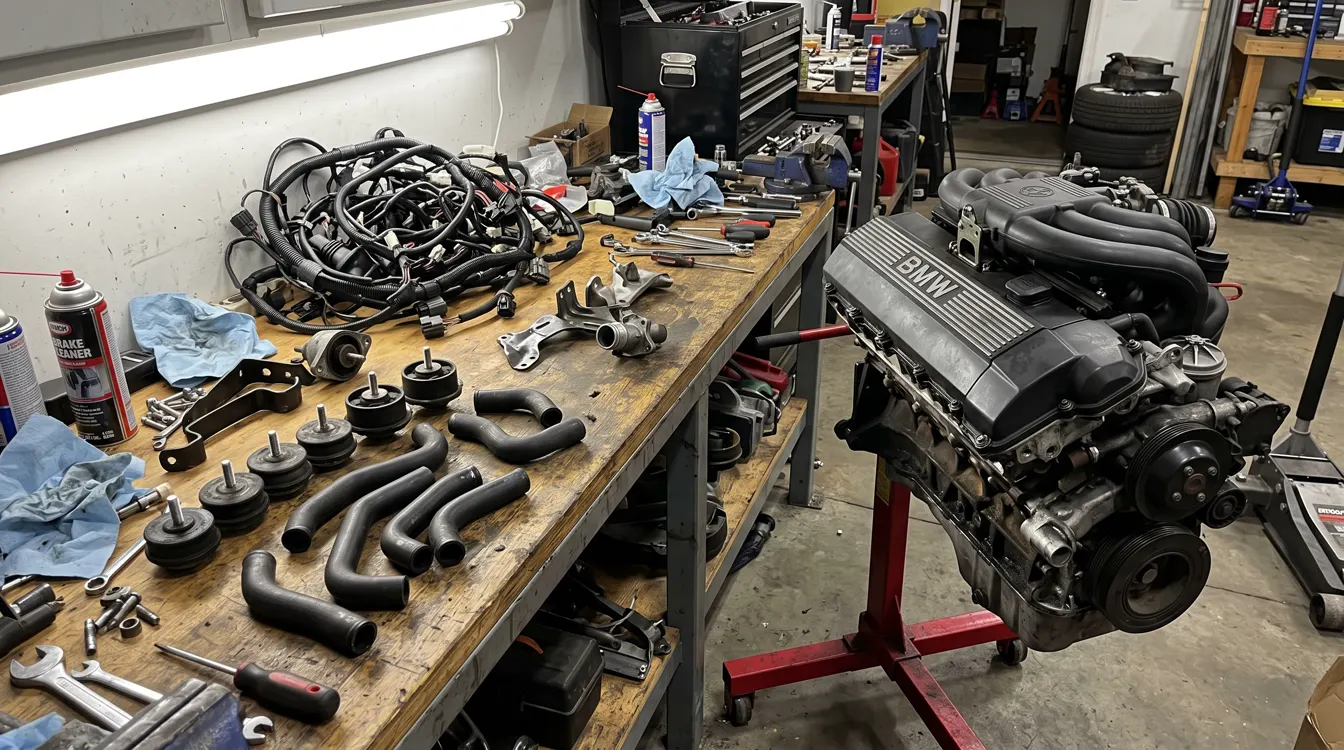
- Remove the M43 and label every connection on the car side.
- Prepare the bay: fit the six-cylinder engine mount arms, the six-cylinder front anti-roll bar (the four-cylinder bar doesn’t clear the M50’s oil pan) and the six-cylinder lower radiator mount.
- Prepare the engine on the stand: reseal it (valve cover, oil pan, oil filter housing gaskets, rear main seal) and fit the new cooling parts.
- Clutch and flywheel: a six-cylinder flywheel with a six-cylinder clutch is the reliable choice.
- Gearbox: BMW’s M20, M40, M42, M43, M50 and M52 share the gearbox bolt pattern, so the four-cylinder gearbox bolts on. Fit the six-cylinder shift linkage. The four-cylinder transmission crossmember is reported to fit, using a different set of holes in the body. See the gearbox guide.
- Driveshaft: the four-cylinder front section is too long. Use a front section that matches your gearbox type: a Getrag front section for a Getrag box, because a ZF section won’t bolt to the flex disc. Fit a new flex disc and centre bearing.
4. Wiring
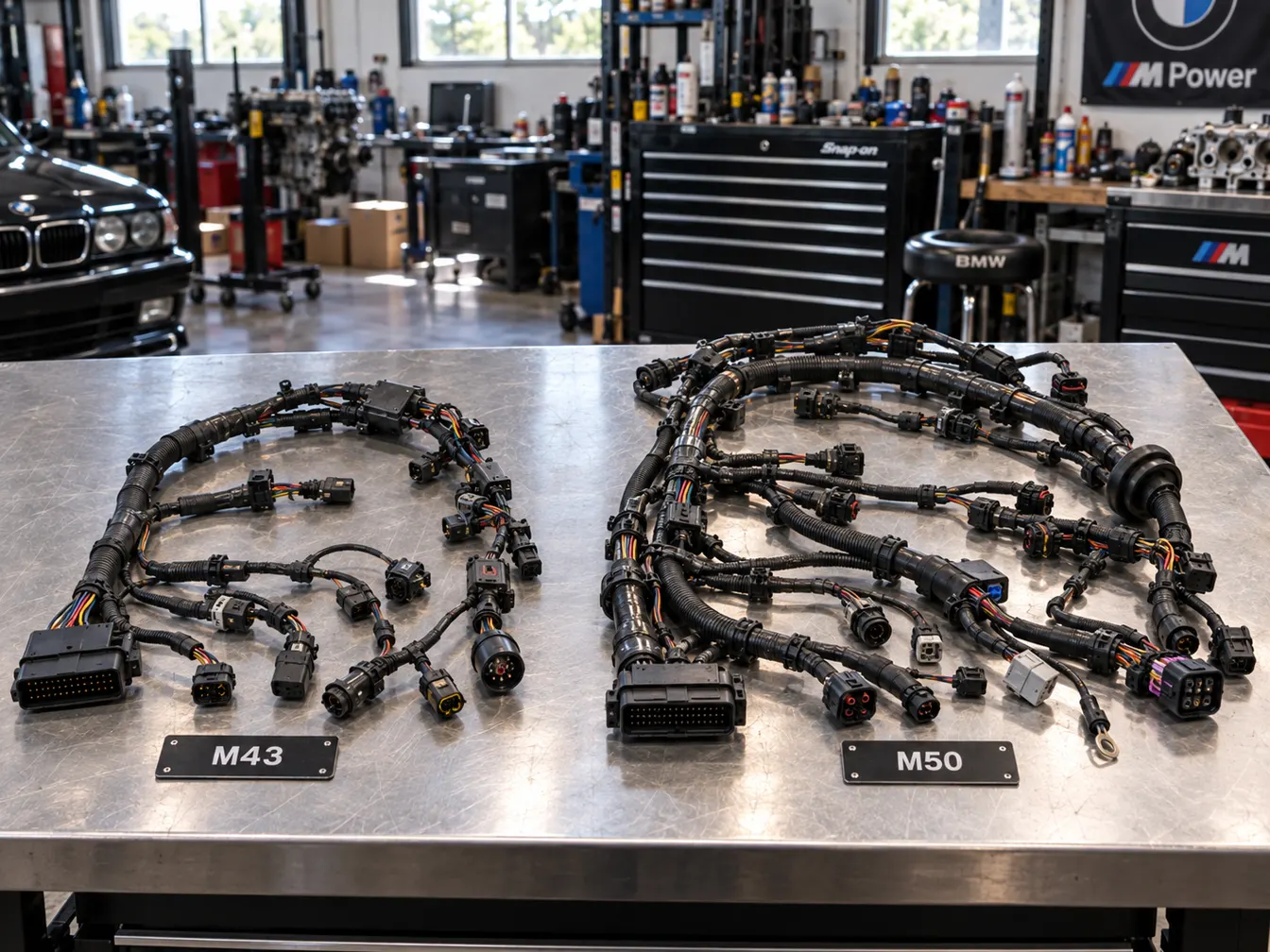
The M50 engine harness plugs into the same chassis connector the four-cylinder harness used. Beyond that, the wiring work is the immobiliser (step 2) and the checks below:
- DME power and grounds: after the swap, check the DME supplies and the engine grounds. See the ground distribution guide.
- Charging: the M50 alternator’s D+ wire must be connected, and the warning light must come on with the ignition on (it excites the alternator). See the charging guide.
- Instruments: check that the rev counter and other gauges read correctly on the first run.
5. Cooling, fuel and exhaust
- Cooling: six-cylinder radiator, fan shroud with its separate expansion tank (the four-cylinder radiator has the tank built in) and an auxiliary fan; everything new. Fill and bleed as described in the cooling system guide.
- Fuel: connect the chassis feed and return lines to the M50 rail the right way round. Check the system pressure on the first start: 3.0 ± 0.2 bar for the M50, 0.4–0.7 bar lower at idle. See the fuel system guide.
- Exhaust: a complete six-cylinder exhaust; none of the four-cylinder system bolts to the M50 manifolds.
- Intake: six-cylinder airbox; the four-cylinder throttle cable is reported to work, though slightly long.
6. First start and checks
- Before starting, check all fluid levels and look for fuel leaks with the ignition on.
- On the first start, watch oil pressure, the charging voltage (13.5–14.5 V at the battery) and the temperature.
- Run the engine to operating temperature, let it cool, and recheck the coolant level.
- If it cranks but won’t start, check the immobiliser and the DME’s power and grounds first. Then read the fault codes (with a diagnostic tool; the accelerator-pedal blink method only works on cars with a Check Engine light): see the OBD1 fault code reference.
Supporting changes
With roughly double the power and a heavier engine over the front axle:
- Brakes: check what your four-cylinder car has; fitting the six-cylinder model’s brakes is the sensible match for the extra power.
- Suspension: springs and dampers suited to the heavier engine keep the front end from sitting low.
- Differential: the four-cylinder ratio works but feels short. A longer six-cylinder ratio (3.15 is common) suits the M50.
- Registration: in Slovakia, have the engine change approved at the inspection authority; brakes and documentation may be part of that.
After a shakedown and a wheel alignment, the car is ready to enjoy.