TL;DR
- What: Restoring E36 door panels: delaminated inserts, loose map pockets, broken clip mounts and a separated top rail.
- Why: After 25-plus years the foam behind the inserts crumbles, the original glue lets go, and old clips break and rattle.
- Key points: remove the old foam and glue completely, use a heat-resistant upholstery contact adhesive, fit new clips, and renew the vapour barrier if it’s damaged.
- Difficulty: 3/5
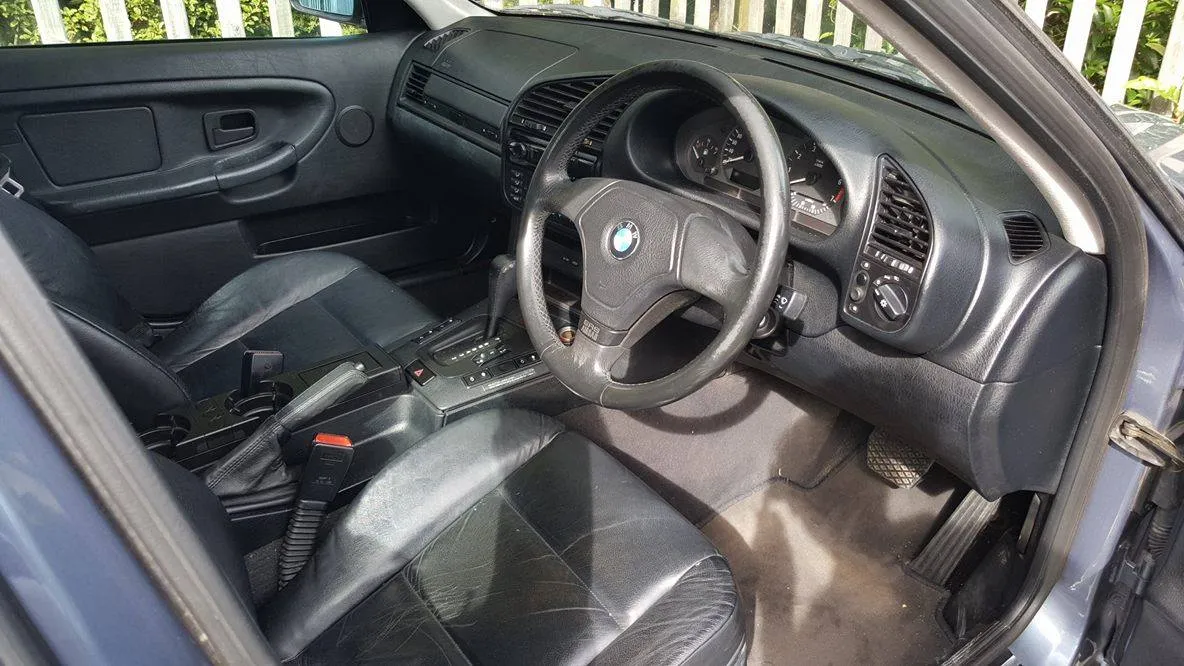
Why E36 door panels fail
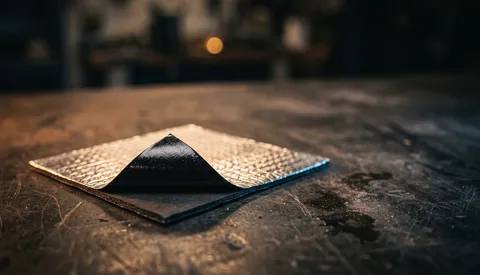
- Insert delamination: the cloth, vinyl or leather insert is bonded over a thin foam layer. The foam breaks down with age into a sticky or powdery layer, and the cover lets go.
- Map pockets and brackets coming loose: the original glue joints go brittle with years of heat and door slams.
- Top rail separation: if the top edge pulls away, the panel won’t sit flush at the window.
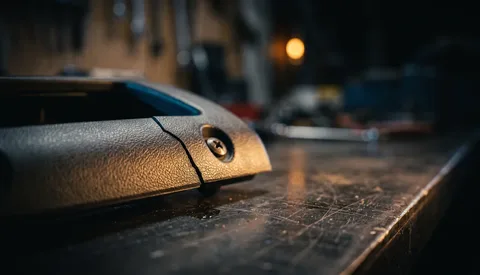
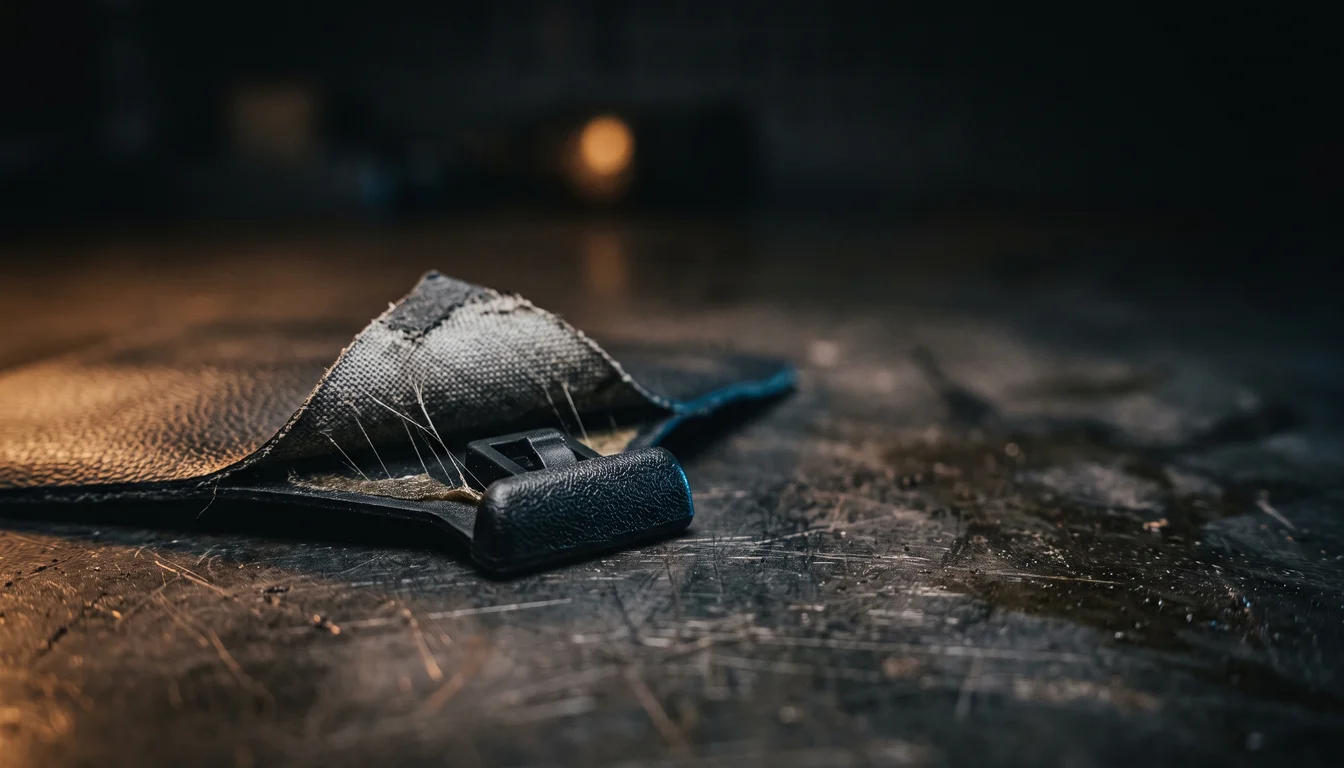
- Broken clip mounts and tired clips: the plastic towers that hold the clips snap, and old clips lose their grip.
Removing the panel (Bentley)
Airbag warning (Bentley): some 1997 and all 1998 cars have side-impact airbags in the front doors. On those cars, disconnect the negative battery cable first, and follow the airbag precautions.
Front door:
- Pry out the mirror adjustment switch (where fitted) and unplug it.
- Unscrew the door lock knob.
- Pry off the inside door handle trim cover and the plugs in the armrest, and remove the panel screws behind them.
- Unclip the panel around the door edge, pulling the clips off one at a time.
- Unplug the speaker.
Rear door: pry out the window switch and unplug it, remove the ashtray, the handle trim cover and the armrest plugs and screws, and unscrew the lock knob. Then unclip the panel, starting at the top.
Re-gluing a delaminated insert
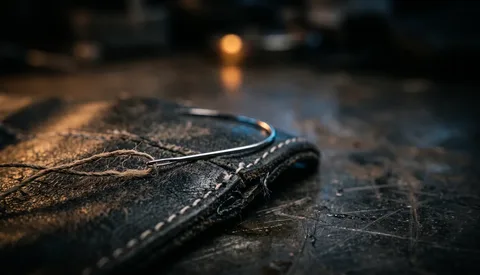
- Separate the insert from the panel if needed. Where it’s held by melted plastic studs, carefully grind off the stud heads at the back; you’ll need small screws or new fixings to refit it.
- Remove all the old foam from the insert board and from the back of the cover. New glue over old foam will fail. Be gentle with solvents on the back of a cover you’re reusing: they can bleed through to the visible side.
- Glue with a heat-resistant upholstery contact adhesive (rated for car interiors, which get very hot in summer). General-purpose spray glue tends to let go in the heat. Coat both surfaces, wait for the flash-off time on the product label, then lay the cover on from the deepest recesses outward and roll it down.
- If the cover has shrunk and won’t reach the edges any more, replace it with new material.
Map pockets, top rail and clip mounts
- Map pockets: remove all old glue, scuff both surfaces, clean them, and bond with a flexible polyurethane adhesive. Clamp and let it cure fully as the label says.
- Top rail: clean down to bare material and re-bond it. A reinforcing mesh over the joint on the back adds strength.
- Clip mounts: rebuild broken towers with a plastic-repair adhesive. Replacement repair brackets are also sold for E36 panels.
- Clips: always fit new ones. On RealOEM, the door panel clip 51 41 1 973 500 and the metal retainer 51 41 8 122 408 are listed for the E36. Confirm what your doors use on the trim diagram.
Refitting (Bentley)
- Replace any damaged plastic parts and clips.
- Renew the vapour barrier if it’s damaged. It keeps water running down inside the door from reaching the panel and the carpets. Seal it all round with butyl sealing tape.
- Align the metal retainers on the window sill with the openings on top of the panel, hook the top on first, then press the clips home.
- Check the door lock and window move freely.
- If the battery was disconnected, re-initialise the window motors as Bentley describes (512 Door Windows).
- On cars with side-impact airbags, use new mounting bolts when refitting the airbag to the door.