The M52 (E36 328i and 323i from 1995/96) is the M50’s successor, and much of a rebuild is the same job. See the M50 rebuild guide for the general order of work. The big difference is the block, and it decides what machine work is even possible. This guide covers the M52-specific points.
Specs policy: Bentley’s E36 manual covers the head, timing and lubrication, but not the crankshaft, bearings and pistons. Internal values not confirmed by two independent sources are marked “check the workshop manual”.
TL;DR
| What: | Rebuilding an M52B25 or M52B28 long block. |
| Why: | Oil consumption, low compression, or a sound base for a swap. |
| First step: | Find out which block you have: Nikasil-lined aluminium or cast iron. |
| Difficulty: | 5/5 |
Which block do you have?
| Version | Block |
|---|---|
| Most markets (early M52) | Aluminium, with Nikasil-coated bores |
| From 1998 | Aluminium with cast-iron cylinder sleeves (BMW’s fix for the Nikasil problem) |
| Original US and Canadian cars (except the Z3) | Cast iron, carried over from the M50 |
| M52B25 | M52B28 | |
|---|---|---|
| Bore × stroke | 84 × 75 mm | 84 × 84 mm |
| VANOS | Single (intake) | Single (intake) |
The Nikasil problem: sulphur in fuel attacks the Nikasil coating. Many early M52s, and the V8 M60s with the same coating, suffered premature bore wear in markets with high-sulphur fuel. On a Nikasil block that is losing compression, the bores are the first suspect.
Why it matters for the rebuild: Nikasil is a thin hard coating on the aluminium, not an iron bore. It can’t simply be bored to the next oversize like the M50’s iron block. Before any machine work:
- establish which bore surface your block has
- go to a machine shop that works with coated bores
- if the coating is damaged, expect a re-coat, sleeves or a replacement block, not a quick hone
Before teardown: diagnose
A compression test and a leak-down test before the engine comes out tell you what you are rebuilding for:
- low compression everywhere, with air escaping into the crankcase: rings or bores
- one or two low cylinders, with air at the intake, exhaust or coolant: valves or head gasket
Also inspect the usual M52 age items as you strip it: brittle cooling-system plastics, the crankcase vent valve and its hoses, the VANOS, and oil leaks around the oil filter housing.
Bottom end
Machine-shop basics, as for the M50: chemical clean, crack inspection, deck check, bores measured. On a Nikasil block, the bores decide the plan: see above.
-
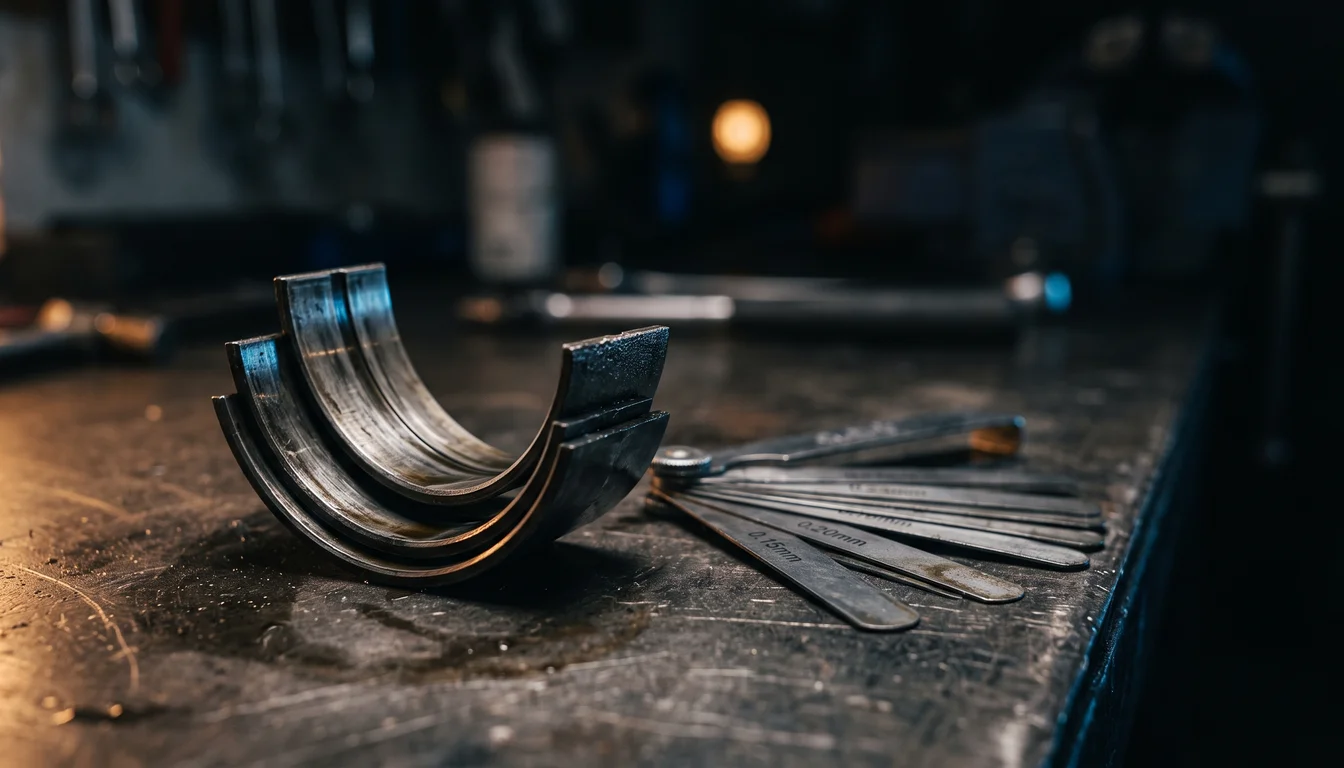
Rod bearing clearance: 0.020–0.055 mm.
-
Main bearing clearance: check the workshop manual.
-
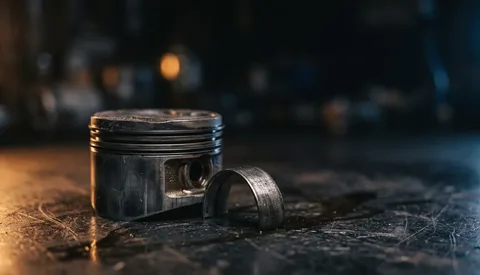
New piston rings, end gaps checked in their bores against the ring maker’s specification.
-
Connecting rod bolts are stretch bolts: fit new ones and tighten them as follows (threads and seats lightly oiled):
Stage Value 1 5 Nm 2 20 Nm 3 +70° -
Main cap bolts: torque plus angle. Check the workshop manual for the values and sequence.
Oil pump and pan (Bentley):
| Fastener | Torque |
|---|---|
| Oil pump to block (M8) | 22 Nm |
| Oil pump sprocket nut (M10×1, left-hand thread) | 25 Nm |
| Oil pan, M6 grade 8.8 / 10.9 | 10 / 12 Nm |
Cylinder head and VANOS
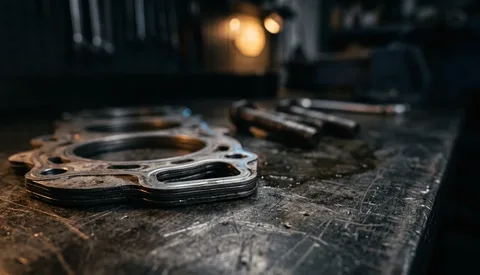
- Pressure-test the head for cracks and check it for warpage. Bentley’s limits: no more than 0.3 mm may be removed, minimum height 139.7 mm (140.0 new). A machined head needs the 0.3 mm thicker gasket.
- A valve job, with new valve stem seals, is the norm.
- The M52 has hydraulic lifters. If the camshafts are removed, observe Bentley’s waiting time before turning the engine: 10 minutes at 20 °C or above, 30 minutes at 10–20 °C, 75 minutes at 0–10 °C.
- Reseal the single VANOS while the head is on the bench: Beisan’s BS011 kit. See the M52 single VANOS guide.
Head, timing and front of the engine (Bentley)
| Item | Value |
|---|---|
| Head gasket | New, with “OBEN” facing up |
| Cylinder head bolts (new Torx stretch bolts, lightly oiled) | 30 Nm, +90°, +90°, in BMW’s sequence |
| Head to lower timing cover | 10 Nm |
| Camshaft bearing caps (M7) | 15 Nm |
| Exhaust camshaft sprocket bolts (M7 Torx) | 5 Nm, then 22 Nm |
| Primary chain tensioner (M52) | 40 Nm |
| Crankshaft hub (new stretch bolt) | 410 ± 20 Nm |
| Flywheel (new bolts) | 105 Nm |
Timing is set with the crankshaft locking pin 11 2 300 and camshaft locking tool 11 3 240. There are no reassembly marks on the camshafts. Confirm the timing by turning the engine through two full revolutions and refitting the tools. See the timing chain guide for the critical points; the M52 procedure follows the same logic.
First start
- Prime the oil system before the first start, so the bearings don’t run dry.
- Fill with BMW-approved coolant, 50/50 with distilled water, and bleed the system (see the cooling system guide).
- Expect some valvetrain noise for the first moments while the hydraulic lifters and VANOS fill with oil. Watch oil pressure, temperature and leaks closely, and follow your ring maker’s break-in advice.