TL;DR
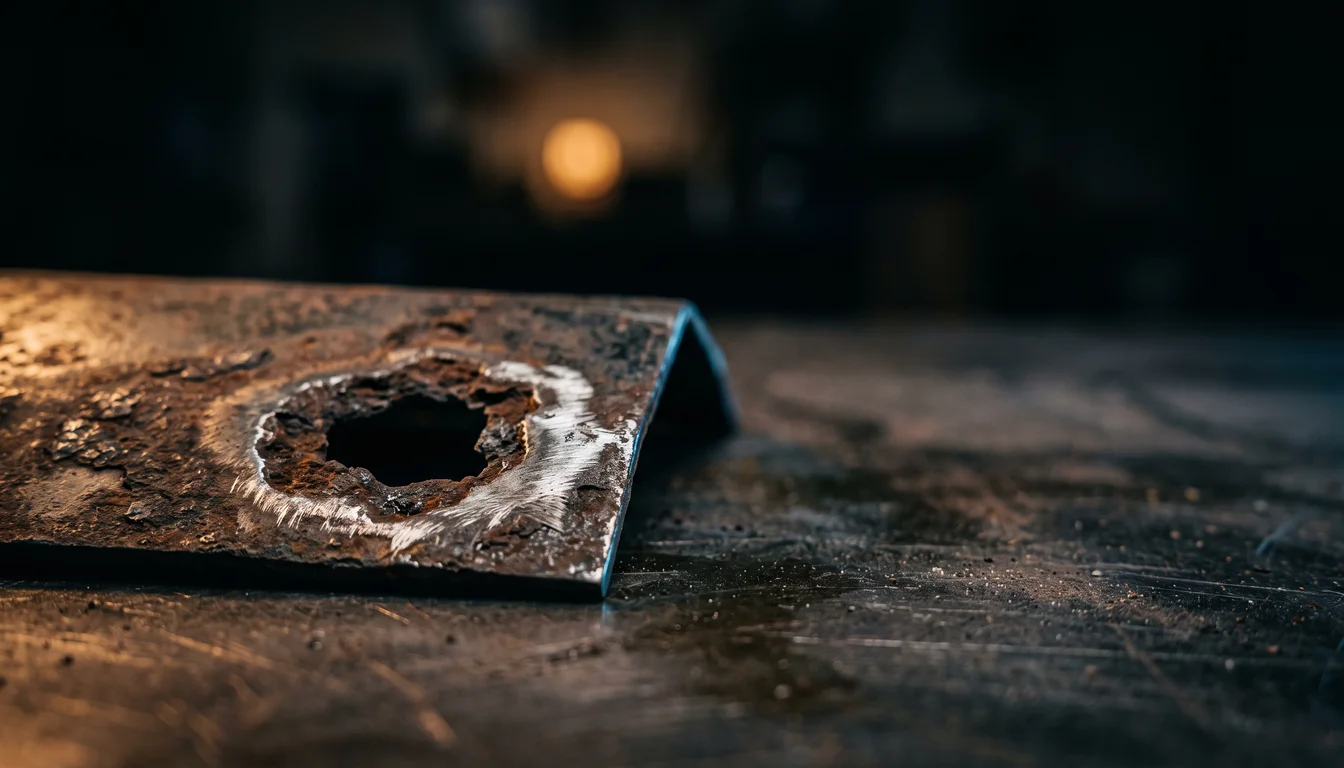
- What: Cutting out rusted E36 jacking points and sill sections and welding in new metal.
- Why: The jacking points carry the car on a jack or lift. Rusted ones fail under load, and rusted sills are a structural problem and an inspection failure.
- Difficulty: 4/5. MIG welding on structural metal, plus careful corrosion protection afterwards.
How the jacking points work
Bentley lists four jacking points: on each side, just behind the front wheel and just in front of the rear wheel. The car’s own jack fits only there. With a floor jack or lift, Bentley says to position the pad carefully and put a liner (wood, rubber) between jack and car.
Each point has a plastic jacking pad fitted into the sill. The pads fall out over time, and water then gets into the mounting hole and the sill behind it. That is where much E36 sill rust starts. The BMW pad (51 71 1 960 752) is listed on RealOEM for the E36. Replace missing pads before rust starts.
Parts and materials
- Repair panels: outer sill sections and jacking-point repair sections are sold by body-panel makers. Expect to trim them to fit.
- Sheet steel for floor or inner-sill patches where no panel exists. Match the original thickness.
- New jacking pads.
- Weld-through zinc primer, epoxy primer, seam sealer and cavity wax.
Assessing and cutting
- Support the car properly: on stands at sound structural points away from the repair, never on the sill you’re cutting.
- Remove trim, carpet and soundproofing near the area. Welding heat sets them on fire.
- Check what runs behind the metal: brake and fuel lines and wiring run along the floor. Move or protect them before cutting or welding.
- Disconnect the battery before welding (Bentley’s rule for any electric welding on the car).
- Strip to bare metal around the rust and find clean, solid steel. Don’t weld to thin, pitted metal.
- Cut out the outer sill section, then assess the inner structure. A small bubble outside often hides far more rot behind it.
Rebuilding
- Inner structure first: cut back the inner sill and floor to sound metal and weld in new sections, so the jacking point has something solid to load into.
- Jacking point: rebuild it, aligned with the opening in the outer sill so the pad sits correctly.
- Protect the inside before closing: epoxy primer on bare metal; weld-through primer on mating flanges.
- Outer sill: trim the repair panel for a tight butt joint, tack it in place, and weld in short stitches spread around the panel so the thin metal doesn’t warp. Plug-weld the bottom flange as the factory spot welds were.
- Grind carefully without thinning the surrounding metal.
Corrosion protection
- Outside: epoxy primer on bare metal, filler only over the primer, then seam sealer, stone-chip protection and paint.
- Inside: flood the sill cavity with cavity wax through a 360° spray wand once all painting is finished. The welds inside the cavity are the most vulnerable spot of the whole repair.
- Jacking pads: fit new pads so water can’t enter the mounting hole.
If you’re new to welding, practise on non-structural panels first, or let a professional body shop do the structural part.
See also: E36 rust map · chassis reinforcement